
- Admin
Important Factors to Compare When Choosing a Pool Service Plan
Choosing a pool service plan involves more than comparing prices. Different companies may offer varying levels of maintenance, visit schedules, and responsibilities, so two plans that appear similar at first may yield very different results.
Selecting the right plan requires understanding what is included, how often service is performed, and how the company handles inspections and maintenance concerns. A plan that fits one homeowner’s needs may not necessarily be the best option for another.
This blog explains how to compare pool service plans before making a decision and highlights factors that can help homeowners choose a plan that supports their pool, fits their budget, and aligns with their long-term maintenance goals.
1. Compare the Services Included in Each Plan
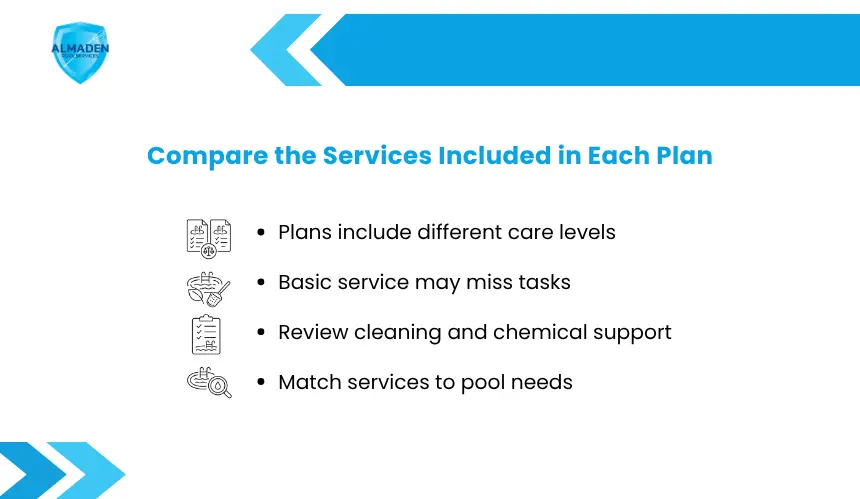
The first thing homeowners should compare is what each pool service plan actually includes. Some plans may cover only basic cleaning and chemical checks, while others may include brushing, skimming, vacuuming, filter care, water testing, and equipment monitoring.
This matters because a lower-priced plan may seem attractive at first, but it may leave out important maintenance tasks that affect water quality and long-term pool condition.
Why not all plans provide the same level of care
Not every pool needs the same type of service, and not every plan is designed the same way. A basic plan may work for a lightly used pool, while a pool with heavy use or higher debris levels may benefit from more comprehensive maintenance.
Reviewing the details of each plan helps homeowners understand the amount of care their pool will actually receive and prevents misunderstandings later.
Services homeowners should review
Before making a decision, homeowners should look at exactly which services are included in each plan. Items such as water testing, chemical balancing, brushing, vacuuming, basket cleaning, filter maintenance, and equipment inspections may vary from one company to another.
Comparing these details side by side helps ensure that the selected plan matches the needs of the pool and provides the level of support the homeowner expects.
2. Consider How Frequently the Pool Will Be Serviced
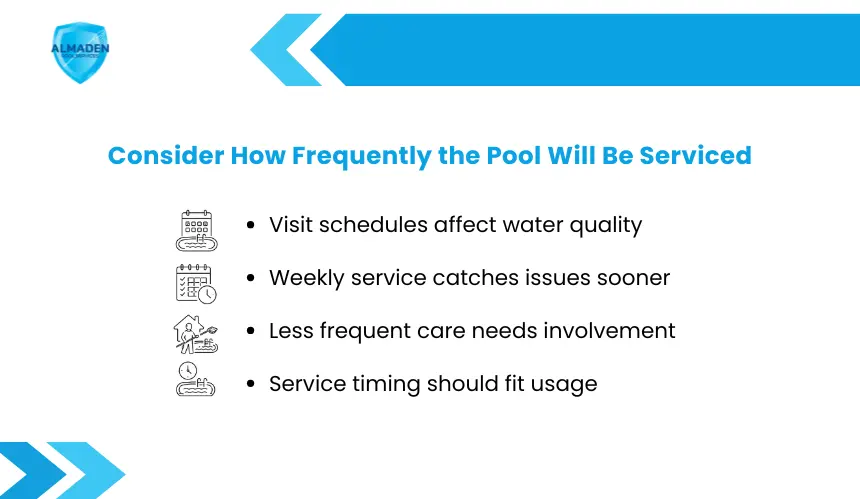
Service frequency is another important factor to compare when evaluating pool service plans. Some plans provide weekly visits, while others may offer biweekly or customized schedules based on the pool’s needs.
The frequency of service can influence water quality, equipment performance, and the amount of maintenance homeowners may need to handle themselves between visits.
Why visit schedules vary between plans
Pool companies may structure their plans differently depending on the type of service they provide. Factors such as pool size, seasonal conditions, usage levels, and local environmental conditions can all influence how often a pool requires attention.
Because every pool has different maintenance demands, a schedule that works well for one homeowner may not be ideal for another.
How service frequency affects pool maintenance
More frequent visits generally allow problems to be identified sooner and help maintain more consistent water conditions. Less frequent service may still be appropriate for some pools, but it could require homeowners to take a more active role in maintaining the pool between appointments.
Understanding the service schedule helps homeowners choose a plan that matches both the needs of the pool and the level of involvement they are comfortable managing themselves.
3. Understand What Responsibilities Remain With the Homeowner
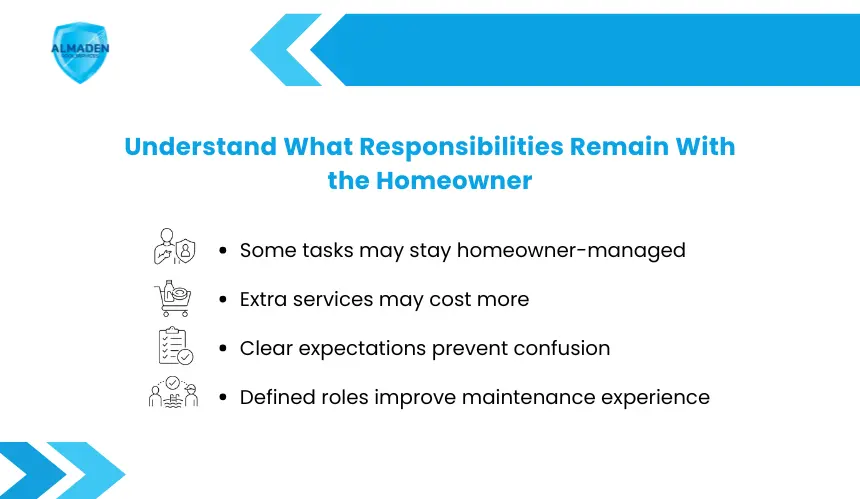
Not every pool service plan is completely hands-off. Some plans cover nearly all maintenance tasks, while others focus only on specific services and expect homeowners to handle certain responsibilities themselves.
Understanding these expectations before choosing a plan helps prevent confusion and ensures that both the homeowner and the service provider are on the same page.
What some plans may not include
Depending on the company, certain plans may not include filter cleanings, equipment repairs, emergency visits, or specialty treatments. Some services may be available only as additional options rather than being part of the standard package.
Reviewing these details carefully helps homeowners understand exactly what they are paying for and which tasks may still require their attention.
Why expectations should be clear from the beginning
Clear expectations help avoid misunderstandings later in the season. Knowing who is responsible for monitoring water levels, emptying baskets between visits, approving repairs, or scheduling additional services allows maintenance to run more smoothly.
When responsibilities are clearly defined, homeowners can choose a service plan that matches their desired level of involvement and provides a better overall experience.
4. Review How Equipment and Repair Issues Are Handled
Pool service plans can differ significantly in how they approach equipment inspections and repair recommendations. While some plans include routine equipment checks, others may focus primarily on cleaning and chemical maintenance.
Understanding how these situations are handled helps homeowners know what to expect if a problem develops during the season.
Whether inspections are included
Some service plans include regular inspections of pumps, filters, valves, and circulation components as part of routine maintenance. These inspections can help identify developing issues before they affect water quality or lead to larger repairs.
Because inspection policies vary between companies, homeowners should confirm whether equipment evaluations are included in the service plan they are considering.
How repair recommendations are communicated
If a technician notices a problem, the company may have a specific process for notifying the homeowner and discussing available solutions. Some companies provide written reports, while others contact customers directly before any work is performed.
Knowing how communication is handled can provide greater peace of mind and help homeowners make informed decisions when repairs or maintenance recommendations arise.
5. Look Beyond Price When Comparing Overall Value
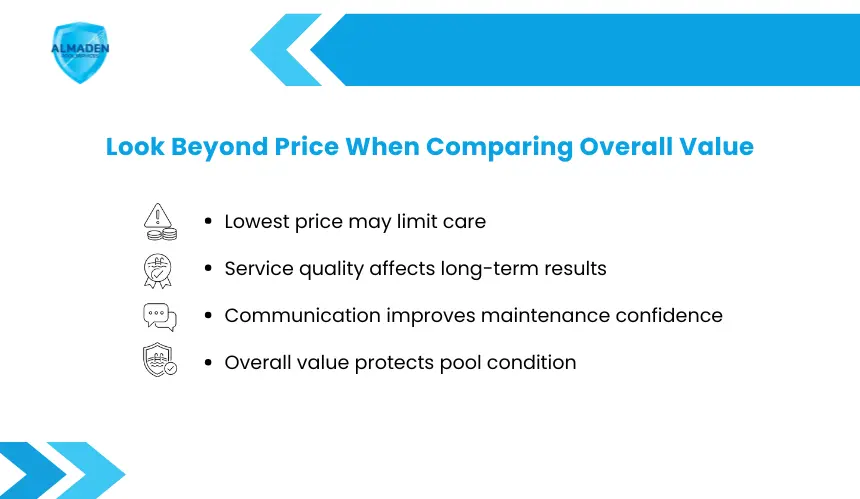
Price is important, but it should not be the only factor used to compare pool service plans. Two plans with similar monthly costs may provide very different levels of service, communication, and long-term support.
Focusing only on the lowest price can sometimes lead homeowners to overlook important details that affect the overall maintenance experience.
Why the lowest price is not always the best option
A lower-priced plan may include fewer services, less frequent visits, or limited equipment monitoring. While this may work for some homeowners, others may prefer a plan that provides more comprehensive care and reduces the amount of maintenance they need to manage themselves. Comparing what is included alongside the price helps provide a more accurate picture of the plan’s true value.
How service quality influences long-term results
Consistent service, reliable communication, and attention to detail can all contribute to healthier water and better equipment performance over time. A company that provides thorough maintenance may help prevent recurring problems and make pool ownership easier to manage.
Evaluating overall value instead of price alone allows homeowners to choose a plan that supports both their budget and their long-term maintenance goals.
Frequently Asked Questions
Can pool service plans be adjusted during the season?
Many companies offer flexible options that allow homeowners to change service levels based on seasonal needs, pool usage, or specific maintenance concerns.
Should homeowners ask for a written description of services?
Yes. A written breakdown helps clarify what is included in the plan and reduces the risk of misunderstandings later.
Are chemical costs always included in pool service plans?
Not always. Some companies include chemicals in the monthly price, while others charge separately depending on usage and water conditions.
Can different pools require different service plans?
Yes. Pool size, surrounding landscape, usage levels, and equipment complexity can all influence the type of maintenance a pool requires.
Is year-round service necessary for every pool?
Not necessarily. Some homeowners use seasonal plans, while others prefer continuous service to maintain more consistent water conditions throughout the year.
Why is communication important when choosing a pool company?
Clear communication helps homeowners understand maintenance recommendations, repair needs, and service expectations, creating a smoother overall experience.