
- Admin
What Makes Professional Pool Startup Different From DIY Preparation
Opening a pool after the off-season involves more than simply removing the cover and adding chemicals. Whether the work is done by a homeowner or by a pool professional, the goal is the same: preparing the pool for a clean and successful swimming season.
The difference often comes down to the level of inspection, testing, and attention given to the pool system during startup. Small details that are overlooked during preparation can sometimes affect water quality, equipment performance, and overall maintenance throughout the season.
This blog explains what makes professional pool startup different from DIY preparation and highlights the key steps that can influence the long-term condition of the pool.
Professional Pool Startup Begins With a More Thorough Inspection
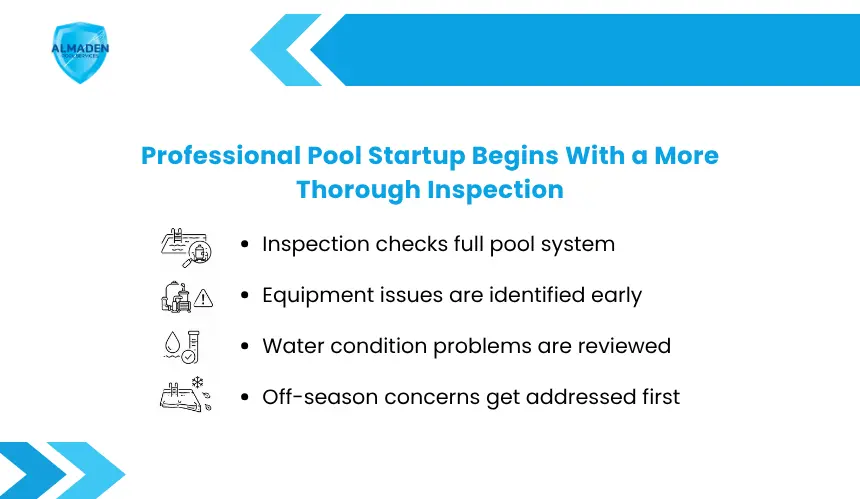
Professional pool startup usually begins with a detailed inspection before the pool is fully placed back into service. This step helps identify visible concerns, equipment issues, and water condition problems that may have developed during the off-season.
A DIY startup may focus mainly on cleaning and adding chemicals, but a professional inspection looks at the pool as a complete system. This helps create a stronger starting point before regular swimming season maintenance begins.
What professionals check before opening the pool
During startup, professionals may check the pool surface, water level, skimmer baskets, pump, filter, valves, plumbing connections, and visible equipment condition. These areas can reveal early signs of wear, blockage, leaks, or restricted circulation.
This inspection helps confirm that the pool is ready to run safely and efficiently. Finding problems early can prevent a simple startup from turning into a difficult maintenance issue later.
Why inspections are important after the off-season
During the off-season, debris, stagnant water, temperature changes, and unused equipment can all affect the pool. Some problems may not be obvious until the system is turned back on and water begins circulating again.
A proper inspection helps catch those concerns before they affect water quality or equipment performance. This makes the rest of the startup process more reliable and easier to manage.
Professionals Use Water Testing to Guide Chemical Adjustments
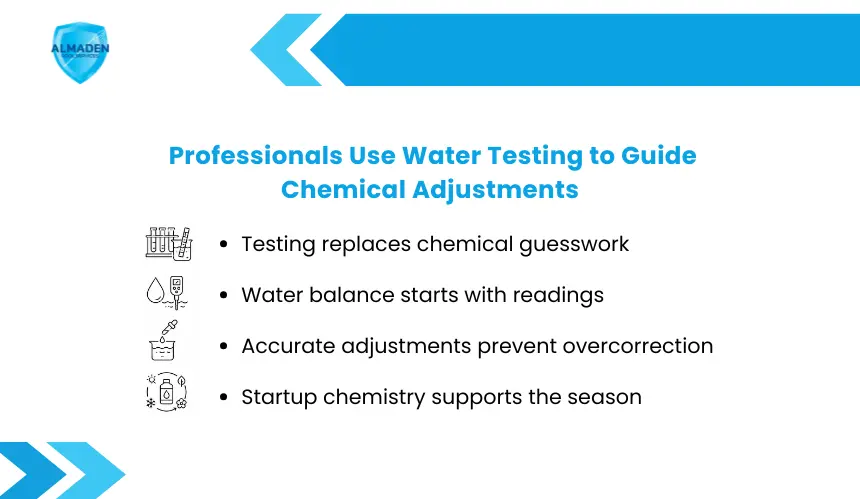
Professional pool startup relies on testing rather than guesswork. Instead of adding chemicals based only on appearance, professionals evaluate the current condition of the water and make adjustments according to the results.
This approach helps create a more balanced foundation for the season and reduces the risk of overcorrecting the water during startup.
How accurate testing supports water balance
Water chemistry can change significantly while the pool is closed for the off-season. Factors such as rainfall, debris, temperature fluctuations, and water evaporation may affect pH, chlorine, alkalinity, and calcium hardness levels.
By testing these values before adding chemicals, professionals can determine exactly what the pool needs. This helps create more stable water conditions and supports better overall water quality.
Why startup chemistry affects the rest of the season
The chemical balance established during startup often influences how easy the pool will be to maintain in the following months. Starting with balanced water can help reduce algae problems, improve sanitizer performance, and make future adjustments more predictable.
When chemistry is corrected properly from the beginning, homeowners often spend less time dealing with recurring water issues throughout the season.
Equipment and Filtration Systems Receive More Attention During Professional Startup
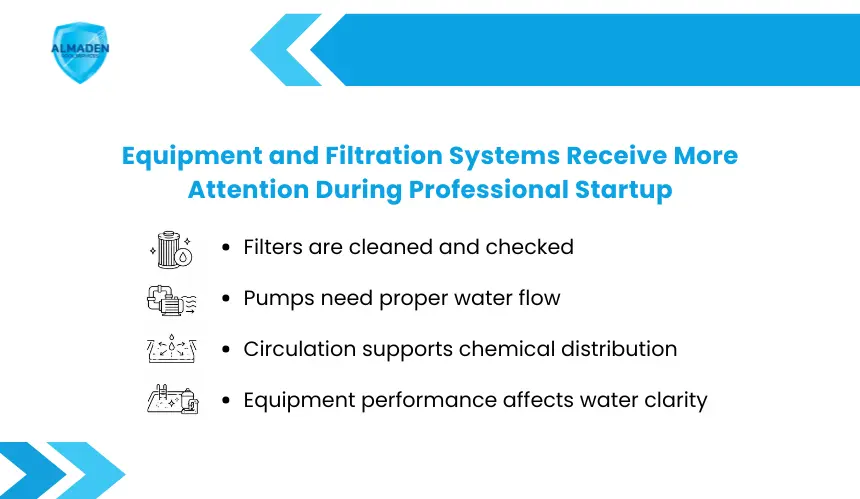
Professional startup focuses on more than just the water itself. Pool equipment and filtration systems also receive careful attention because their performance has a direct impact on water quality and overall pool operation.
Even if the water is balanced properly, problems with circulation or filtration can make it difficult to maintain those conditions throughout the season.
How filters and circulation systems are evaluated
During startup, professionals typically inspect filters, pumps, baskets, valves, and circulation components to make sure they are operating correctly. Filters may be cleaned or serviced, and water flow is checked to confirm that the system is moving water efficiently.
These steps help ensure that the pool can properly remove debris and distribute chemicals once regular use begins.
Why equipment performance affects water quality
Healthy circulation and filtration allow chemicals to reach all areas of the pool while continuously removing contaminants from the water. When equipment is not performing properly, even balanced water can become difficult to maintain.
By giving equipment additional attention during startup, professionals help create conditions that support clearer water and more consistent performance throughout the season.
Professional Startup Helps Identify Problems Early
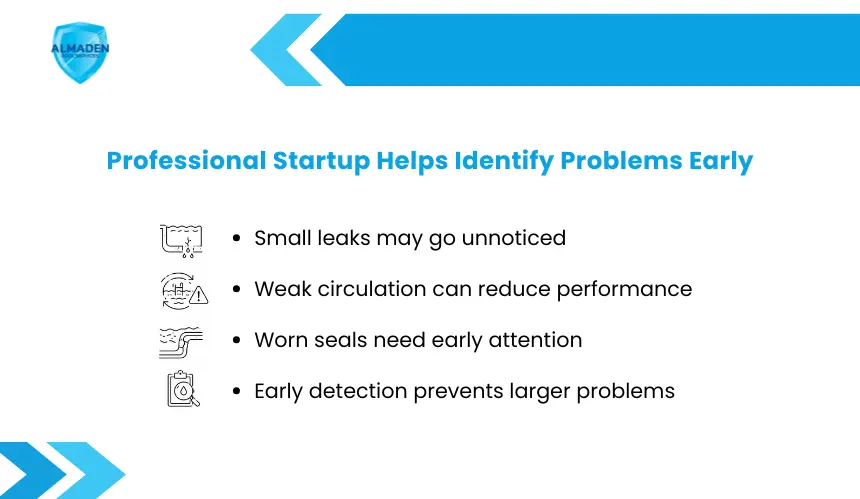
One of the biggest differences between professional and DIY preparation is the ability to recognize developing issues before they become larger problems. Experienced technicians often notice warning signs that homeowners may overlook, especially after the pool has been inactive for several months.
Identifying these concerns early helps prevent small problems from affecting water quality or causing unnecessary stress on the pool system.
Issues that may go unnoticed during DIY preparation
Minor leaks, unusual equipment noises, dirty filters, weak circulation, worn seals, and early signs of component wear are not always obvious during a routine DIY startup. Because the pool may still appear functional, these issues can remain hidden until they become more serious. Over time, unresolved problems can affect both maintenance and equipment performance.
Why early detection helps avoid larger problems
Finding issues during startup allows repairs or adjustments to be made before the swimming season is fully underway. Addressing a minor concern early is often easier and less disruptive than dealing with an unexpected breakdown later.
Early detection also helps create more stable operating conditions, making the pool easier to maintain throughout the season.
Professional Preparation Creates a Stronger Foundation for the Season
A successful swimming season often begins with the quality of the startup process. While both DIY and professional preparation aim to get the pool ready for use, professional startup typically focuses on creating long-term stability rather than simply getting the pool operational as quickly as possible.
By addressing water chemistry, equipment performance, filtration, and potential concerns at the beginning of the season, professionals help establish conditions that support easier maintenance moving forward.
How proper startup supports easier maintenance
When the pool starts the season with balanced water and properly functioning equipment, routine maintenance often becomes more manageable. Clear water, healthy circulation, and efficient filtration make it easier to maintain consistent conditions throughout the summer. This can reduce the need for repeated chemical adjustments and help prevent many common water quality issues.
Why consistency matters throughout the swimming season
Pool care is most effective when the system operates under stable conditions. Consistency in circulation, filtration, and water balance helps support cleaner water and more reliable equipment performance over time. A well-executed startup creates a strong foundation that can make the rest of the swimming season smoother and easier to manage.
Frequently Asked Questions
How long does a professional pool startup usually take?
The time required depends on the size of the pool, water condition, and whether any equipment issues are discovered. Most startups can be completed within a single visit, although additional treatments may sometimes be needed.
Can homeowners still maintain their pool after a professional startup?
Yes. Many homeowners perform routine maintenance themselves after the initial startup has been completed. Professional startup simply helps establish proper conditions at the beginning of the season.
Does every pool need the same startup process?
No. Factors such as pool size, equipment type, climate, and water condition can influence the steps required during startup. Each pool may have different needs after the off-season.
Is professional startup only recommended for neglected pools?
No. Even well-maintained pools can benefit from a thorough startup process because equipment, water chemistry, and circulation conditions may change while the pool is closed.
Can weather affect pool startup timing?
Yes. Temperature changes, heavy rain, and seasonal conditions can all influence when and how the startup process should be performed.
What happens if a problem is discovered during startup?
If an issue is identified, repairs or adjustments can often be made before the problem affects the swimming season. Early detection helps prevent larger disruptions later.